
About your Metro trains
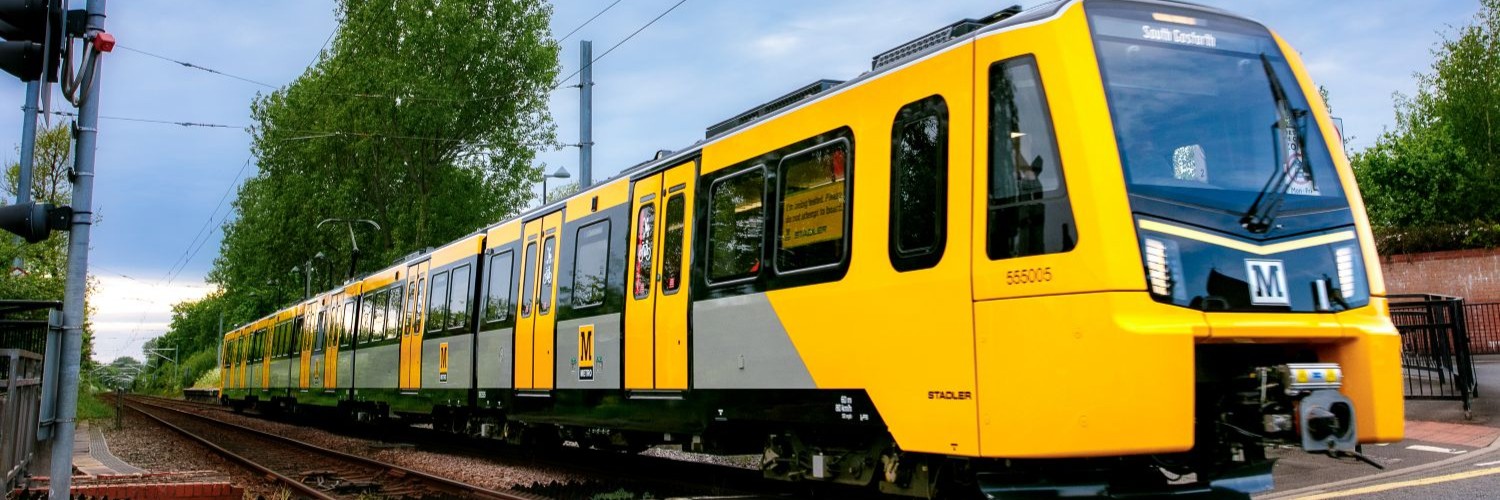
More efficient, more reliable and more environmentally friendly: 46 new Metro trains are being introduced.
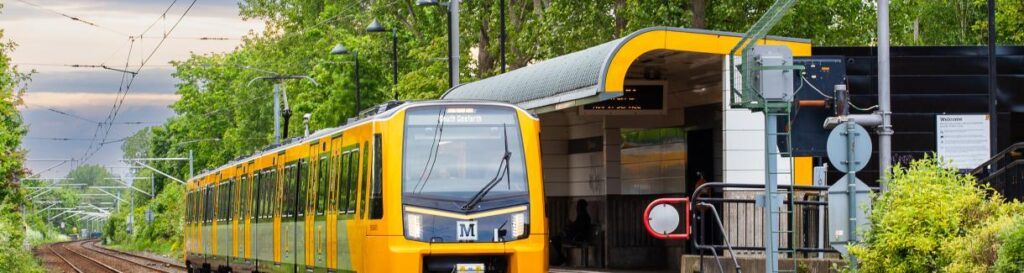
The delivery of 46 bespoke new trains is the biggest project in Tyne and Wear Metro’s history. Offering high quality, comfort, reliability, security and accessibility, these trains transform the customer experience.
The first new Metro train entered customer service on 18 December 2024.
Before each new train enters customer service they go through thousands of detailed safety checks and tests to ensure they operate safely and seamlessly with the 60 Metro stations and 77km of track.
You can keep up to date with everything relating to our new fleet on our You Tube playlist.
Want to know more about Tyne and Wear Metro trains? Here’s a handy guide with all you need to know.
Your new Metro trains
Learn all about the new Tyne and Wear Metro trains.
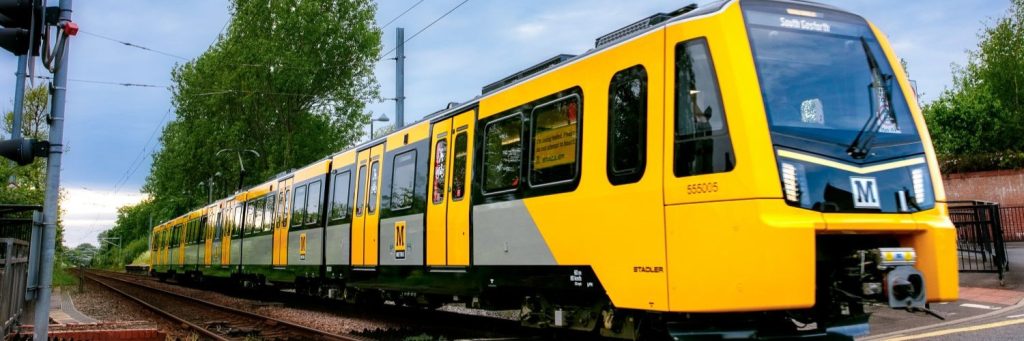
- Single train – you can walk right through from front to back
- Climate control and heated floors
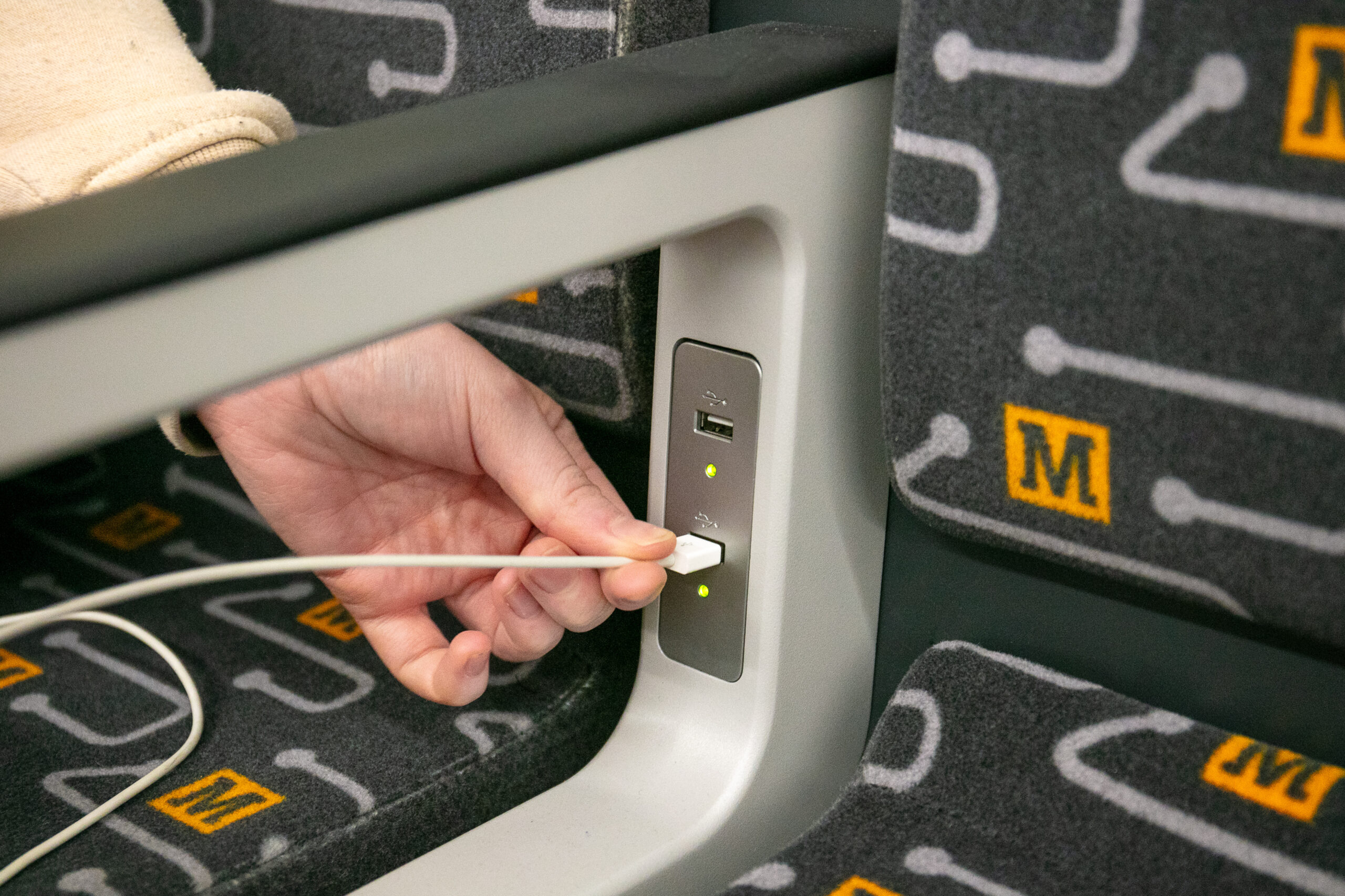
- Charging points throughout the train
- External and internal destination screens
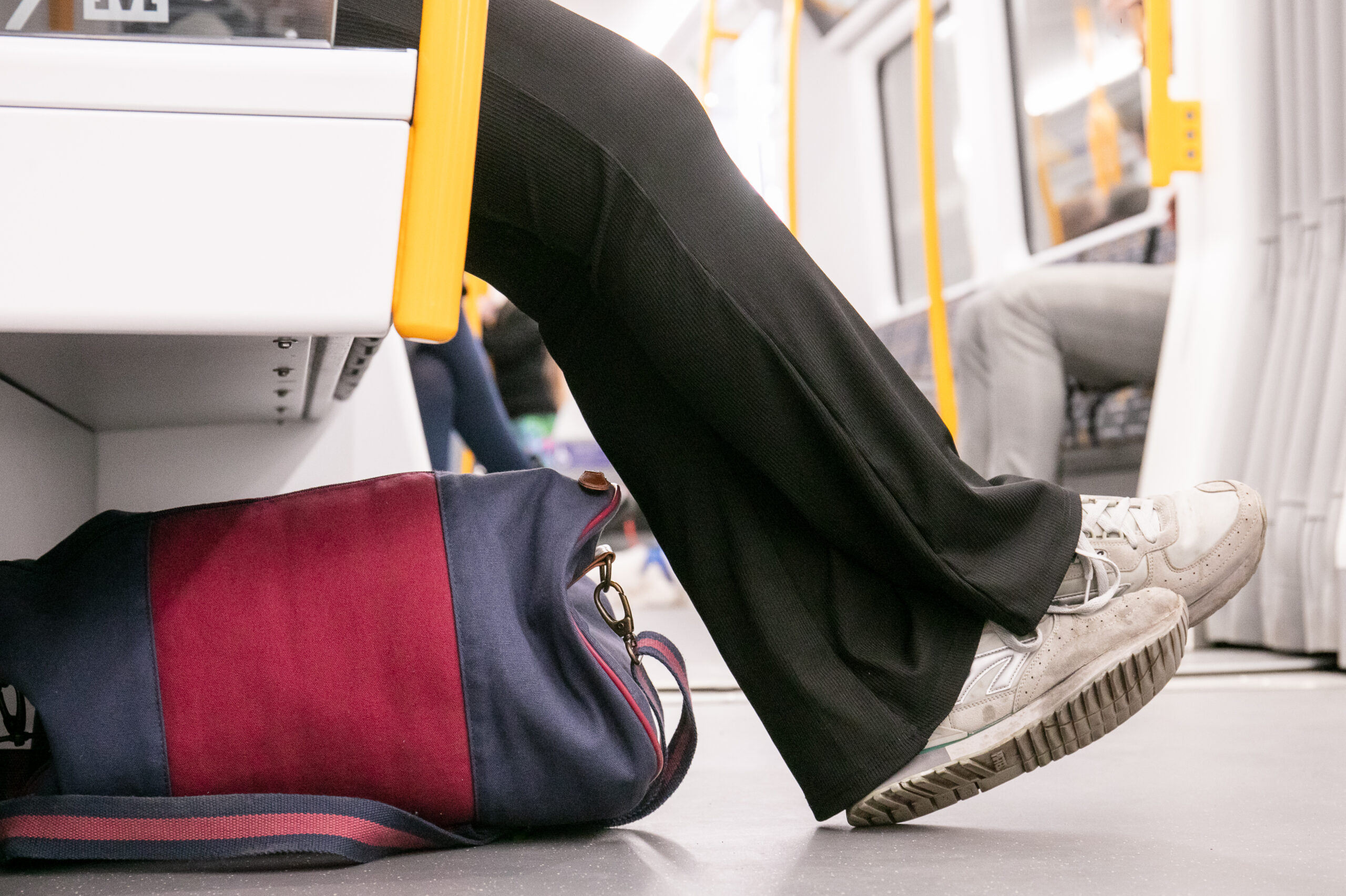
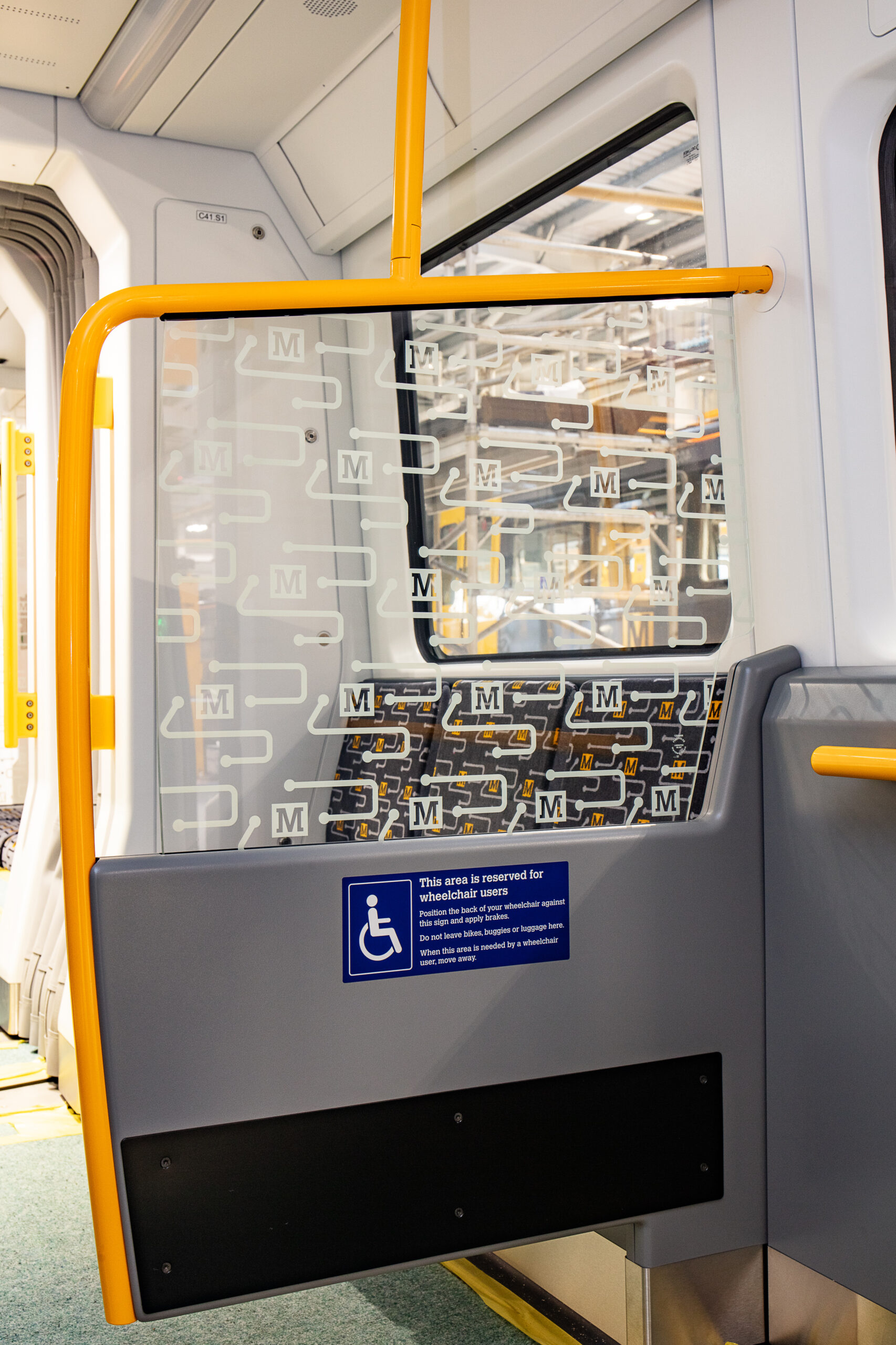
- Four dedicated wheelchair spaces. There are also multi-use spaces suitable for non-folding bicycles, pushchairs and luggage.
- Sliding step at every door
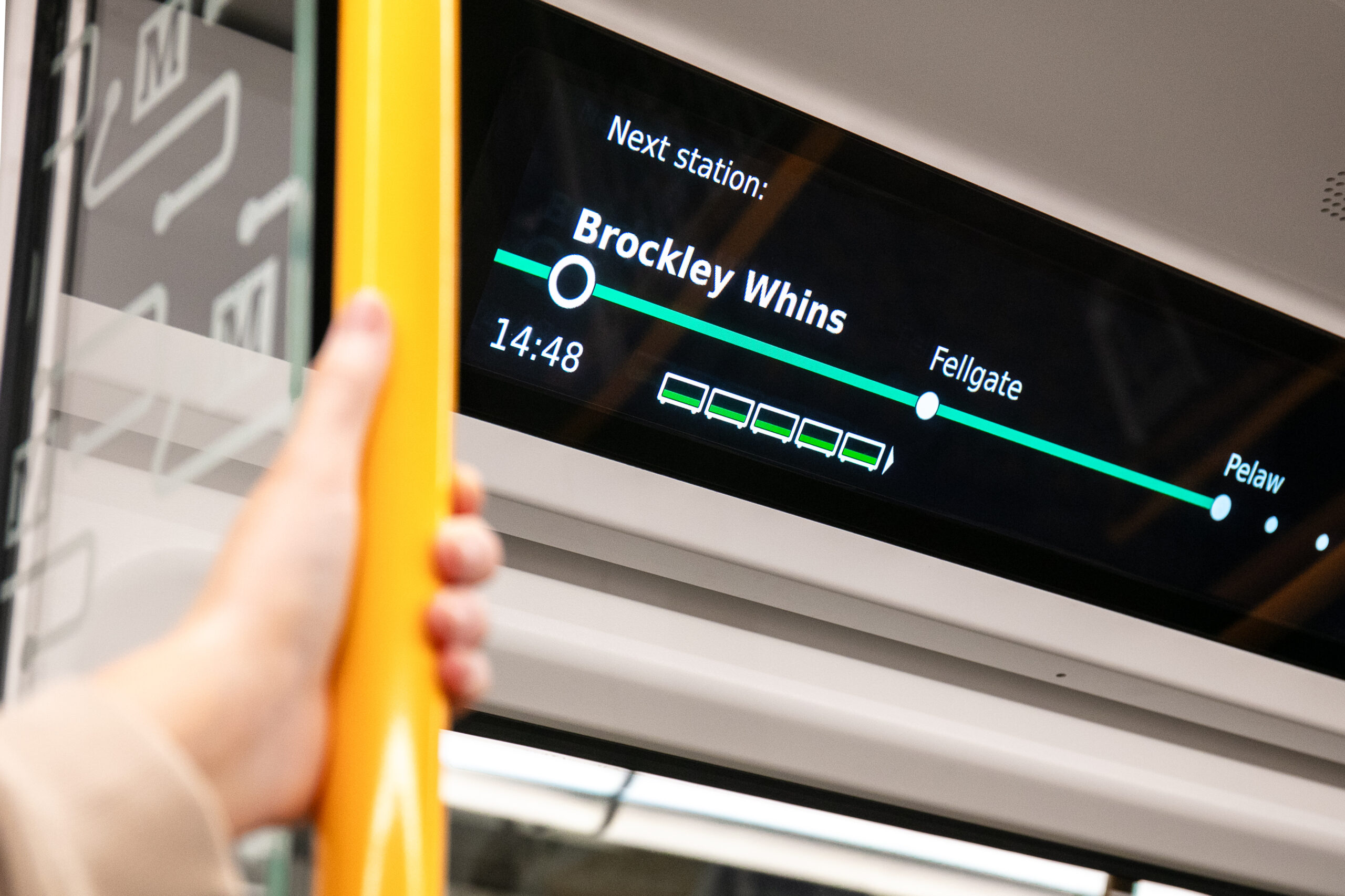
- Information screens throughout the train
- 44 high-definition digital CCTV cameras on each train
- More energy efficient
- £70m new train depot featuring rainwater recycling, daylight capture and other environmental features
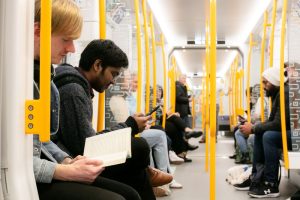
- An open-plan and flexible seating layout, with stand-back areas at each door to aid circulation and create more room for passengers at busy times. The number of seats increases from 104 to 116, through the introduction of 12 tip-up seats in each train.
- Four dedicated wheelchair spaces, matching the quantity in the original fleet, plus two multi-use areas suitable for non-folding bicycles, pushchairs and luggage. These areas have tip-up seats to provide flexible space for different customer needs through the day.
- An automatic sliding step at each door, narrowing the gap between the train and the platform, making travel easier for Metro’s 50,000 wheelchair passengers as well as people with buggies, luggage or bicycles.
- Digital information screens at key locations throughout the carriage, in addition to central ‘strip’ screens with ‘next stop’ text and audio facilities. The screens will be visible from 90% of all seats and 100% of priority seats.
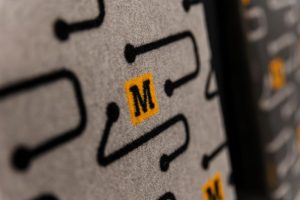
- The seats are made from a hard-wearing material and will have a sleek grey colour. They were designed by our in-house team and they will incorporate the iconic ‘M’ logo in the Calvert font we use on all Metro signage.
- Modern features including charging points and climate control.
23,000 responses were received during the consultation process, resulting in changes to a range of the interior features.
Key areas where Metro customers and employees have shaped the train design are:
- Extra seats: 12 tip-up seats added to the original design to provide greater comfort and flexibility.
- Handrails in wheelchair areas: Wheelchair users asked for something to hold onto in the four spaces on each train.
- Wall finishings: customer service teams suggested greater contrast with floors to aid the visually impaired.
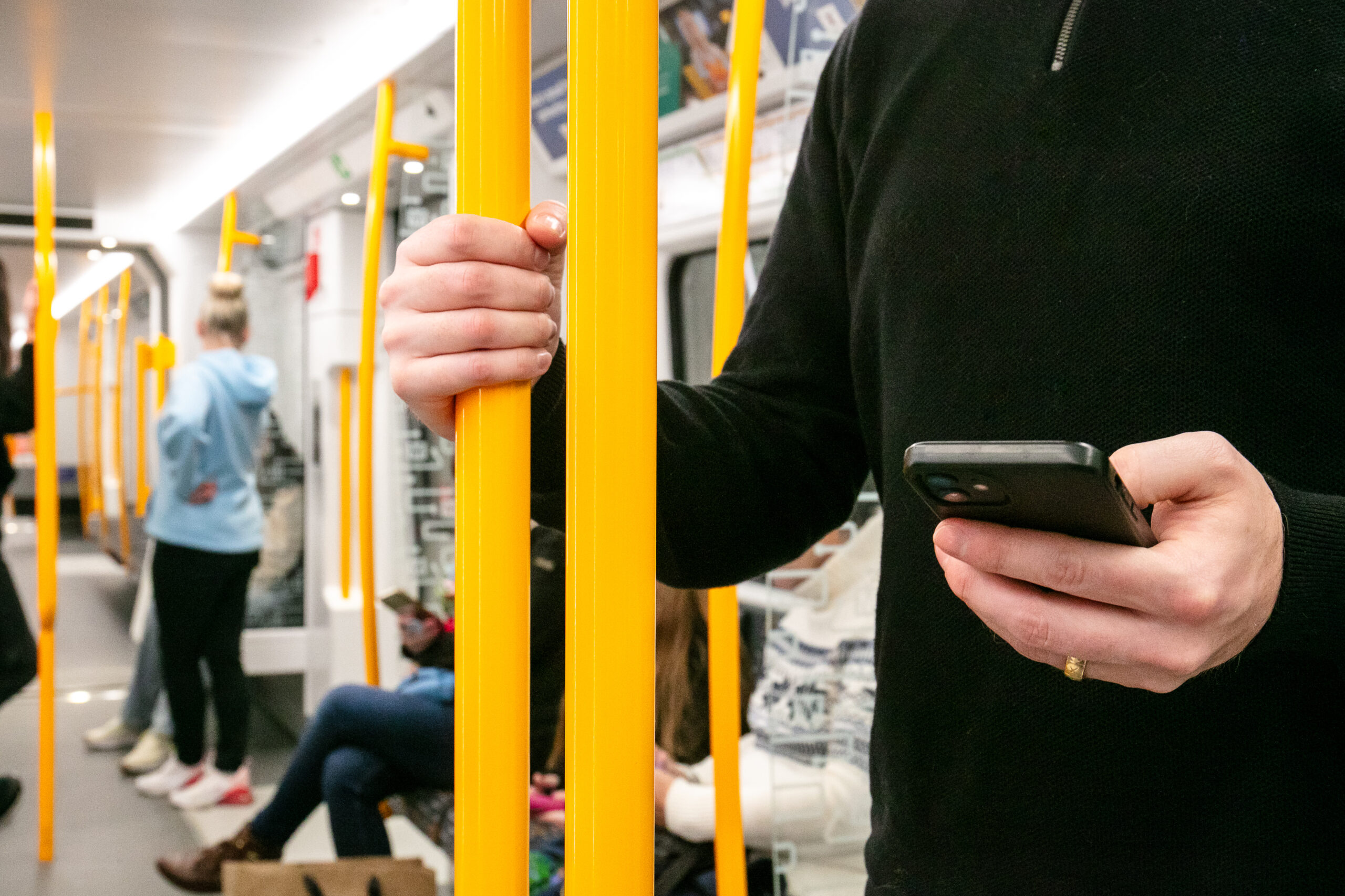
- Double grab poles: This new feature was the popular choice of customers from three options.
- Seat and divider decal: A final pattern for seat coverings and glass divider decals based on Metro’s iconic ‘M’ logo was created by the Metro Graphic Design team, following customer feedback.
- Floor markings: Floor markings for wheelchair and multi-use spaces have been changed from white to bright yellow to provide greater visibility.
- Colour differentiation between poles and doors: Customers wanted yellow poles which stand out and match our current trains; interior door finishes were changed to contrast with these.
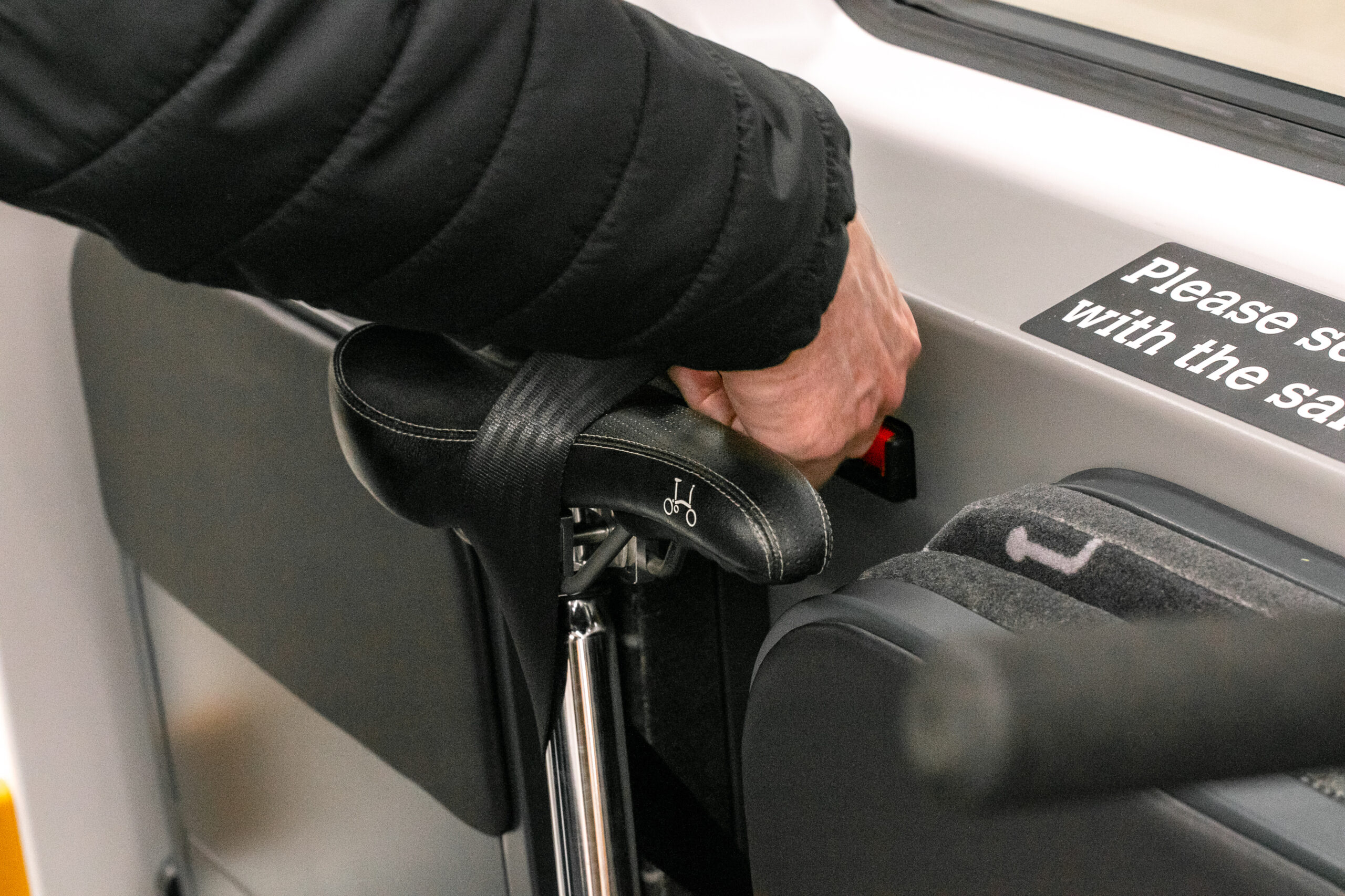
- Bike holder: A belt clip to hold bikes was the popular choice with cyclists.
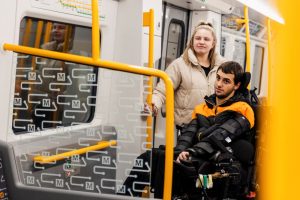
Our new trains have been built with everybody in mind.
The fleet is a step-change in accessibility.
Our new fleet has been carefully designed to be able to provide a seamless service for everyone. To increase our accessibility, the new fleet has features such as designated areas for wheelchair users, push bikes, buggies and luggage storage.
Other accessibility features on our new trains include:
- Improved lighting and audio-visual technology
- Contrasting colours
- There are four dedicated wheelchair spaces per train for the 50,000 unsupported wheelchair journeys on Metro every year
- An automatic sliding step to narrow the gap between the train and the platform edge
In 2023, there was a series of visits for special interest groups to experience the new Metro trains- and see how their feedback shaped the final designs.
The groups, including people with visual and hearing impairments, physical and learning disabilities and special interest groups like cyclists, were all invited to familiarisation days to see the range of accessibility features in action.
Learn more of what the groups had to say about accessibility here:
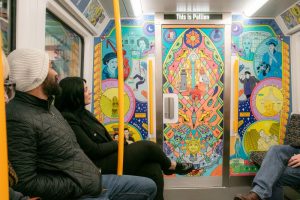
Four artists each won a unique commission to create major works for the interior of Metro’s new train fleet.
Metro was the first urban transit system in the world to feature permanent art inside trains when the new fleet entered service, thanks to a project led by Nexus and funded by Arts Council England through its National Lottery Project Grants Programme.
Two works of art appear on each train, with each work appearing 23 times across the whole fleet as a result.
The four floor-to-ceiling works which fill the internal end walls of each carriage include:
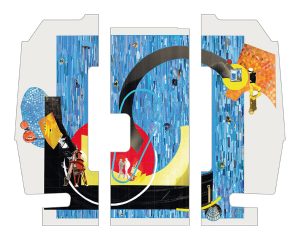
Macro-Micro by Bryony Simcox:
Bryony’s large-scale collage is constructed entirely from hand-cut paper pieces, built up from images sent by local people in answer to the question “what makes this place glow?”. Pushing against the traditional glossy imagery used to promote a place, the work takes on a striking abstract form when seen from down the carriage, while inviting people to dive into idiosyncratic and personal details up close.
Bryony Simcox is an urbanist, optimist and maker who studied architecture at Newcastle University. She works with hand-cut paper collage to draw together diverse imagery into playful and surreal scenarios referencing architecture, travel and the human form.
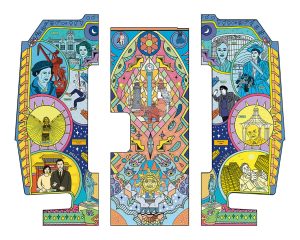
Blazing Trails by Sofia Barton
Sofia’s work explores the hidden histories and trail-blazing personalities which have helped make North East England a vibrant and inclusive place to live. The digital montage draws on influences including Sofia’s own Punjabi heritage and her upbringing in Newcastle’s west end.
Sofia Fox Barton is a multidisciplinary artist from Newcastle whose bright artwork is heavily influenced by nature and her Punjabi heritage. Inspired by feminism and history, her style often consists of vintage imagery, patterns as well as symbology. She works across mediums such as print, painting and digital art, with her work exhibited at the Baltic Centre of Contemporary Art, Dockside Gallery, Pink Collar Gallery and Split Milk Gallery in Edinburgh.
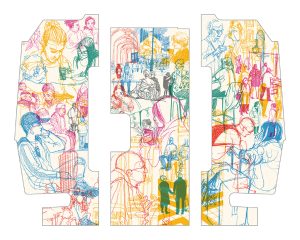
Drawn to Life by Sara Gibbeson
Sara’s aim for her artwork on Metro is to capture a slice of life from around the region, bringing her sketches together to create a snapshot of the people and places she observes as she travels by Metro and visits communities around it. She has brought together and enlarged dozens of these intimate pen and pencil line drawings to overlap each other in a dense and intriguing final work in which the viewer’s focus continually changes.
Sara, an illustrator and lecturer based in South Shields, spent weeks and months travelling on Metro sketching her fellow passengers and people at work and play in local town and city centres. Her work captures people, places and everyday moments, using both digital and traditional tools to create lively, hand drawn imagery with a limited colour palette.
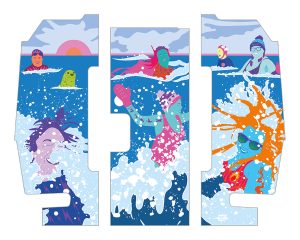
North Sea Mermaids by Nocciola the Drawer
Hazel Oakes, working as Nocciola the Drawer, has created a digital mural celebrating the communities of women who come together to wild sea swim on the beaches served Metro at Seaburn, South Shields and Tynemouth. Hazel immersed herself in research, swimming, chatting and filming with her subjects to create an inspiring, refreshing and empowering celebration.
Hazel is an illustrator and mural artist from County Durham. She has a nomadic spirit and feels her sense of community with women anywhere in the world. She specialises in bright, bold, colourful artwork that combines female characters with lively patterns, all with the aim to uplift, inspire, empower and celebrate women.


